


Updated:
22.3.2026
Published
22.3.2026
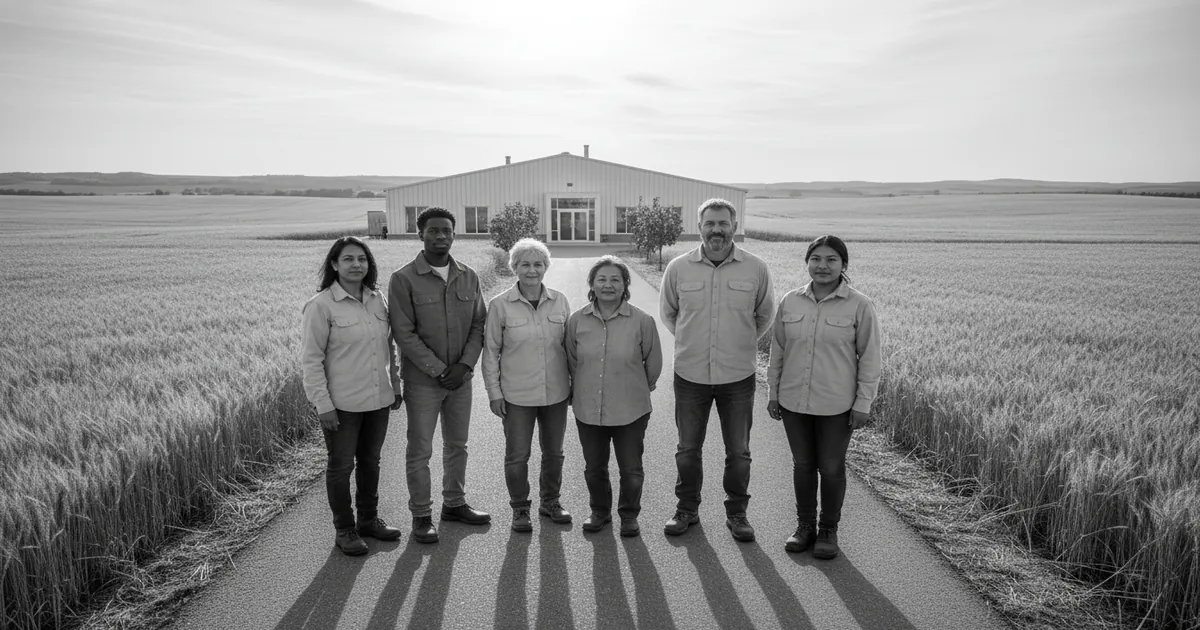
Canada's rural communities have faced chronic labour shortages for years. From agriculture and food processing to hospitality and manufacturing, employers in smaller towns and rural regions often struggle to find workers. The federal government has taken notice—and is taking action.
On March 13, 2026, Immigration, Refugees and Citizenship Canada (IRCC) announced a significant expansion of the Temporary Foreign Worker Program for rural employers. Starting April 1, 2026, businesses in designated rural areas can increase their proportion of low-wage temporary foreign workers from 10% to 15% of their workforce.
If you are a business owner in rural Canada or a foreign national looking for work opportunities, this policy change could open new doors.
Interested in exploring rural work permit options? Book a consultation to discuss your specific situation.

Why Canada Is Expanding Rural Work Permits in 2026
Labour shortages in rural Canada are not new, but they have reached critical levels. According to the Canadian Federation of Independent Business (CFIB), over 55% of small businesses in rural areas reported unfilled positions in 2025, compared to 40% in urban centres.
The reasons are structural:
- Young Canadians are leaving rural areas. Statistics Canada data shows that rural populations have been declining for decades, with young workers moving to cities for education and employment.
- Aging workforce. In many rural communities, the average age of workers in key industries like agriculture and manufacturing is well above the national average.
- Seasonal demand spikes. Industries such as agriculture, tourism, and food processing have peak seasons where labour demand far exceeds local supply.
- Geographic barriers. Workers in cities are often unwilling to relocate to rural areas, even when jobs are available.
The federal government's solution: make it easier for rural employers to access the Temporary Foreign Worker Program. This is not a new program - it is an expansion of existing rules that removes some of the barriers rural employers face when trying to hire foreign workers.
What Changes on April 1, 2026?
The key changes effective April 1, 2026 are:
Key Point: This Is Not a Cap Increase for Everyone
This expansion applies only to employers in designated rural areas. If your business is located in a Census Metropolitan Area (CMA) with a population over 100,000, you are not eligible for the 15% cap. The standard 10% cap (or lower, depending on sector) continues to apply in cities like Toronto, Vancouver, Calgary, and Montreal.
How "Rural" Is Defined
For TFWP purposes, "rural" generally means areas outside of CMAs. IRCC uses the Statistics Canada definition:
- Urban: A Census Metropolitan Area (CMA) or Census Agglomeration (CA) with a population of 100,000 or more.
- Rural: Areas outside these boundaries.
ESDC posted "As early as April 1, 2026, employers in rural areas may be eligible for temporary measures on the proportion and/or number of temporary foreign workers hired for some low-wage positions located in regions outside census metropolitan areas and within participating provinces and territories."
Examples of eligible rural areas include:
- Smaller towns in Ontario outside the GTA
- Agricultural regions in British Columbia's Interior
- Communities in the Prairie provinces outside Calgary, Edmonton, Winnipeg
- Atlantic Canada communities outside Halifax
- Northern regions across all provinces and territories
If you are unsure whether your business qualifies as "rural," the IRCC website provides a postal code lookup tool, or you can contact our team for clarification.
Who Benefits from the Rural TFWP Expansion (Temporary Measures)?
For Canadian Employers
If you operate a business in rural Canada and have struggled to fill positions, this expansion gives you more flexibility. Specifically:
- Higher workforce proportion. You can now fill up to 15% of your positions with low-wage TFWs, making it easier to maintain operations during peak seasons or address chronic vacancies.
- Continuation of current workers. If you already have TFWs working for you, this policy allows you to maintain your current workforce levels rather than being forced to reduce staff.
- Access to a broader labour pool. Combined with other TFWP streams (high-wage, agricultural, etc.), you can build a workforce strategy that meets your needs.
For Foreign Workers
If you are a foreign national seeking to work in Canada, the rural TFWP expansion creates opportunities:
- More job openings. As employers gain the ability to hire more TFWs, there will be more LMIA-approved positions available.
- Pathway to permanent residency. Some provincial nominee programs (PNPs) prioritise applicants with work experience in rural areas. Working in rural Canada can strengthen your PR application.
- Lower competition. Many foreign workers focus on urban centres. By targeting rural positions, you may face less competition for jobs and for PR pathways.
How the LMIA Process Works for Rural Employers
Even with the expanded cap, employers must still obtain a Labour Market Impact Assessment (LMIA) before hiring a foreign worker through the TFWP. The LMIA process confirms that:
- There is no Canadian or Permanent Resident of Canada worker available to fill the position.
- Hiring a foreign worker will not negatively impact the Canadian labour market.
- The employer is offering prevailing wages and meeting all regulatory requirements.
Step-by-Step: LMIA Application for Rural Employers
Step 1: Determine the wage classification.
Wages are classified as "high-wage" or "low-wage" based on the provincial or territorial median hourly wage. As of 2026, the thresholds are:
Note: These figures are updated annually. Confirm current rates on the ESDC website.
If your offered wage is below the median, the position is classified as "low-wage" and falls under the cap rules (now 15% for rural employers).
Step 2: Advertise the position.
Before applying for an LMIA, you must advertise the job to Canadians for a minimum of four weeks. Advertising requirements include:
- Posting on Job Bank (mandatory)
- Posting on at least two other recruitment methods (e.g., local job boards, industry websites)
- Targeting underrepresented groups (e.g., Indigenous peoples, newcomers)
Step 3: Submit the LMIA application.
Applications are submitted to Employment and Social Development Canada (ESDC). You will need:
- Business legitimacy documents
- Proof of recruitment efforts
- Job offer details and contract
- LMIA processing fee ($1,000 per position as of 2026, unless exemption apply)
Step 4: Receive the LMIA decision.
Processing times vary by stream. As of early 2026, the average processing time for the Low-wage Stream is about two to three months.
A positive LMIA allows the foreign worker to apply for their work permit.
Step 5: Worker applies for work permit.
Once you receive a positive LMIA, the foreign worker can apply for their work permit from within Canada (if eligible) or from abroad. Processing times depend on the worker's country of residence.
Conclusion: A Window of Opportunity for Rural Canada
The April 2026 TFWP expansion represents a meaningful opportunity for both Canadian employers and foreign workers. For businesses in rural areas, it provides greater flexibility to address labour shortages. For foreign nationals, it opens doors to work in Canada - and potentially build a pathway to permanent residency.
However, the rules are complex, and compliance is critical. Missteps in the LMIA process can result in delays, refusals, or even bars from future applications.
Have Questions About Rural LMIAs?
Navigating the LMIA process can be complex, especially with the new rural cap rules. Book a consultation with our team to discuss your hiring needs and develop a compliance strategy.
FAQ
What is the new rural work permit cap in Canada for 2026?
Starting April 1, 2026, employers in designated rural areas can hire up to 15% of their workforce through the low-wage stream of the Temporary Foreign Worker Program. This is an increase from the previous 10% cap and applies until March 31, 2027 (Temporary Measures).
Which areas qualify as "rural" for the TFWP expansion?
Rural areas are defined as locations outside Census Metropolitan Areas (CMAs) and within participating provinces and territories. This includes most small towns, agricultural regions, and northern communities across Canada.
Do I still need an LMIA to hire foreign workers in rural areas?
Yes. The expanded cap does not eliminate the LMIA requirement. Employers must still obtain a positive Labour Market Impact Assessment before hiring a temporary foreign worker, regardless of location.
How long does the rural LMIA process take in 2026?
Low-wage stream LMIA processing times are currently averaging 40–60 business days.
Can working in rural Canada help me get permanent residency?
Yes. Several Provincial Nominee Programs (PNPs) offer pathways for workers in rural areas. For example, Ontario's Rural and Northern Immigration Pilot and similar programs in other provinces prioritise applicants with work experience in underserved communities.
Thank you! Your submission has been received!
Oops! Something went wrong while submitting the form.


